Waste management in the Netherlands
The STI2D technology stream along Amsterdam’s canals
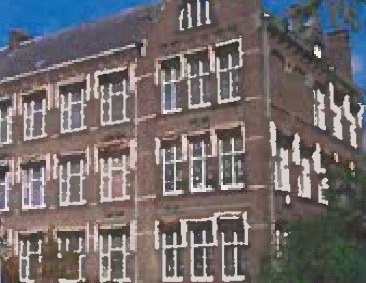
Fourteen students of the STI2D technology stream compared waste-management practices in Guadeloupe and the Netherlands with the Metis Montessori Lyceum in Amsterdam, the second most sought-after high school in the region.
The project
The programme included canal cleaning with the Plastic Whale association, an eco-citizenship park clean-up, bike rides, a survey on eco-responsible behaviours inside and outside the school, a presentation of Guadeloupe in French class and a carnival workshop to share Guadeloupean culture.
Students discovered a city that mainly travels by bike, cleans its canals by boat every day and provides countless sorting bins; at school they observed “building thinking classrooms”, individual lockers and tutoring organised during the second period of the day.
Two individual teacher mobilities (physics-chemistry, engineering sciences) extended the observation: pedagogical coaching, Montessori periods based on volunteering, and a skills booklet enabling student self-assessment.
The students of the STI2D technology stream compared upstream the waste-sorting infrastructures of both territories and prepared an observation protocol transferable to Amsterdam.
On site
- Comparison of waste-management practices in Guadeloupe and the Netherlands
- Observation of the daily cleaning of the canals by boat
- Study of cycling mobility and neighbourhood bins in the city
- Meetings with the teams of the Metis Montessori Lyceum
Highlights
- Cleaning of Amsterdam’s canals with Plastic Whale
- Carnival workshop and exchange of culinary specialities
- Comparison of the French and Dutch school systems published by the teachers
In detail
- Group: 14 students of the STI2D liaison stream, 2 accompanying teachers (life and earth sciences, physics-chemistry) and 2 staff members (mathematics); mobility from 12 to 22 April 2024.
- At the Amsterdam school: support for high schoolers during the second period of the day, with pre-registration with a teacher according to the student’s needs or the theme set by the teacher.
- Science rooms fitted with instruments and scientific objects to spark the desire to learn; a locker available for every student in the school.
- One referent teacher per subject organises the course material, progression and assessments; multisupport textbook chosen by the students; list of required competences with the student choosing when to be assessed.
- “Building thinking classes”: classroom practices that foster reflection; collaborative learning between students.
- In the city: numerous sorting bins, travel mainly by bicycle and daily cleaning of the canals by boat to collect plastics and waste.
Crossed perspectives
The mobility showed how much waste management in the Netherlands relies on daily, collective gestures: canals cleaned every day, cycling as the main mode of transport, sorting equipment everywhere in the city.
Results and follow-up
Links established for long individual student mobilities, progress in English expression, projects for an acoustic parabola and a Galton board in the schoolyard, and trial of the skills booklet.
In pictures